Gutter guards work by allowing rainwater to flow into the gutter while blocking leaves, twigs, pine needles and other debris. Depending on the design, they use screens, mesh, surface tension or specialized covers to keep gutters clear and maintain proper water flow. Understanding how gutter guards work helps homeowners choose the right system for their roof, trees and local weather conditions.
Every spring and fall, the story is often the same: the gutters were cleaned a few months ago, but they’re overflowing again.
“The gutters were cleaned a few months ago but they’re overflowing again.”
At first glance, it seemed like a maintenance issue. But often, the pattern points to something else: leaves, seeds, pine needles, and other debris are continuing to enter the gutters. The problem wasn’t homeowners forgetting to clean their gutters, it was that the gutters were collecting debris faster than they could keep up.
That’s why more homeowners are searching “how do gutter guards work”. They’re not looking for another seasonal chore. They’re looking for a system that helps stop the cycle before it starts.
At Ceccola Construction, we’ve found that understanding how gutter guards function is just as important as choosing the right product.
Cleaning Gutters Doesn’t Stop Leaves from Falling
Many people think gutter cleaning solves the problem. It solves today’s problem.
It won’t be solved next month.
If your property has mature trees, falling leaves, seed pods, pine needles and small branches will continue collecting every season.
Heavy rain only makes things worse by pushing that debris toward downspouts, where blockages usually begin. That’s where gutter guards change the equation.
Instead of waiting until debris fills the gutter, they reduce how much debris gets inside in the first place.
How Do Gutter Guards Work?
The basic idea is simple.
Water gets in.
Leaves stay out.
Different products accomplish that goal in different ways but they all focus on separating water from debris before it reaches the gutter channel.
This is the reason homeowners ask “how do gutter guards work” before deciding whether they’re worth installing.
Let’s look at the main designs.
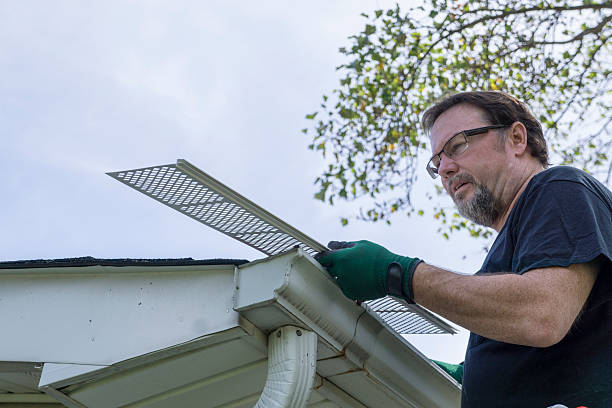
Mesh Guards: Small Openings, Big Difference
Fine mesh guards are among the most common options today.
Tiny openings allow rainwater to pass through while blocking larger debris like-
- Leaves
- Twigs
- Acorns
- Seed pods
Because the openings are small, less material enters the gutter system, which may reduce how often the gutters need cleaning.
However, very fine debris like roof grit or tiny pine needles may still require occasional maintenance depending on the surrounding trees.
Surface Tension Systems: Let Water Hug the Edge
One of the more interesting designs relies on physics.
Instead of letting water fall straight through a screen, these systems guide rainwater around a curved edge. Because water naturally follows the curved surface, it flows into the gutter.
Leaves don’t.
They continue over the edge and fall to the ground.
Screen Guards: A Simple Barrier
Screen guards use larger openings than fine mesh. They’re generally effective against larger leaves but may allow smaller debris to pass through.
For homes surrounded by large deciduous trees, they can still reduce maintenance compared to completely open gutters.
The best option depends on the type of debris your property collects throughout the year.
Gutter Guards Aren’t Magic and That’s Okay
One misconception is that gutter guards eliminate maintenance forever.
They don’t.
Over time, debris can still collect on top of the guards. Wind can move small particles onto the roof. Heavy storms can wash roof granules into the system.
Gutter guards also don’t:
- Repair damaged, sagging, or poorly sloped gutters.
- Fix undersized gutters or downspouts.
- Prevent fine debris from reaching downspouts.
- Eliminate the need for periodic inspection.
The difference is that maintenance becomes much easier because you’re removing debris from the surface instead of digging out clogged gutters and downspouts.
They’re Especially Helpful Around Certain Types of Trees
Some properties benefit more than others. Gutter guards can be particularly useful if your home is surrounded by-
- Oak trees
- Maple trees
- Birch trees
- Pine trees
- Sweetgum trees
Each produces different types of debris, but all increase the likelihood of clogged gutters during the year.
Homes without nearby trees may not need the same level of protection.
Why Overflow Is About More Than Gutters
Overflowing gutters don’t just create a mess. They can affect other parts of your home.
Poor drainage may contribute to-
- Foundation erosion.
- Basement moisture.
- Landscape damage.
- Wood rot near the roofline.
- Ice dams during winter.
- Premature fascia deterioration.
That’s why learning “how do gutter guards work” isn’t simply about keeping leaves out. It’s about protecting the entire water management system around your home.
Not Every Gutter Guard Fits Every Home
The best product depends on several factors.
Including-
Roof design
Steeper roofs move water differently than low-slope roofs.
Tree coverage
Heavy tree cover requires finer protection than open properties.
Rainfall
Areas with frequent heavy rain need systems that can handle larger water volumes without overflowing.
Existing gutters
Older or damaged gutters may need repairs before guards are installed.
Choosing the wrong system can reduce performance instead of improving it.
A Good Installation Matters as Much as the Product
Even high-quality gutter guards can underperform if they’re installed incorrectly.
Improper alignment, loose fasteners or poor water flow can still allow debris buildup or overflow.
Professional installation helps ensure the guard works with your roof, gutter size and drainage system instead of against it.
Roof pitch and mounting angle affect whether water enters the gutter or overshoots it, especially on steeper roofs and at valleys where flow concentrates. The same product can perform differently on different homes.
If your gutters overflow even after cleaning, the cause may be more than leaves. A gutter inspection can show whether the issue is debris, gutter condition, drainage, or the need for gutter protection. Ceccola Construction offers gutter installation services in New Castle County.
Conclusion
If you’ve cleaned your gutters every spring and fall only to deal with the same overflowing problem again, you’re not alone.
Understanding “how gutter guards work” helps explain why many homeowners are moving from repeated maintenance to long-term prevention.
At Ceccola Construction, we help homeowners choose gutter protection based on their roof, surrounding trees and drainage needs, not just what’s popular. The right system won’t eliminate every bit of maintenance but it can make protecting your home far easier throughout the year.
FAQs
How do gutter guards work during heavy rain?
Most quality gutter guards are designed to let large amounts of rainwater enter the gutter while reducing the amount of debris that gets inside. Choosing the right system for your roof is important.
Do gutter guards completely eliminate gutter cleaning?
No. They reduce debris buildup significantly, but occasional inspections and light cleaning are still recommended to maintain proper drainage.
Are gutter guards worth installing if I don’t have many trees?
They can still help prevent debris buildup from wind, roof granules and small twigs but homes with heavy tree coverage see the greatest benefit.
Can gutter guards fix gutters that keep overflowing?
Not always. Overflow can also come from clogged downspouts, undersized or poorly sloped gutters, damaged gutters, or heavy roof runoff. An inspection can help determine whether the problem is debris, gutter condition, drainage, or the need for gutter protection.
Will gutter guards fit my existing gutters?
Yes. Most systems can be installed on existing gutters if they’re in good condition. A professional inspection can determine whether repairs are needed before installation.