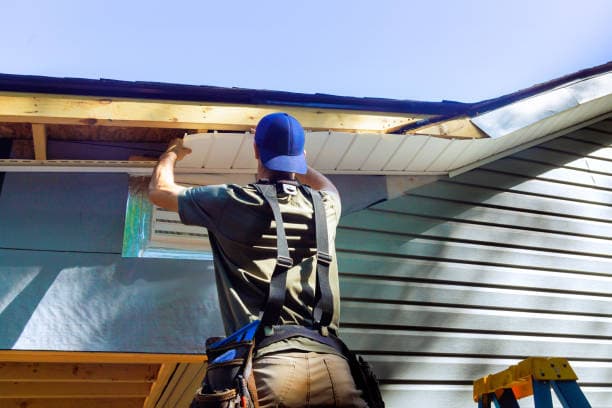
The fascia is the horizontal board attached to the edge of your roof where gutters are mounted. The soffit is the finished surface underneath the roof overhang that helps ventilate the attic and protect the underside of the roof. Understanding the difference between soffit and fascia helps homeowners describe problems accurately and choose the right repairs.
“I think my soffit is falling off.”
After a quick look, it’s actually the fascia or sometimes it’s the other way around. It happens more than you might think.
Homeowners aren’t expected to know every roofing term but mixing up these two parts of the roofline can create confusion during inspections, delay accurate estimates or even result in repairs that don’t address the real issue.
That’s one reason so many people search “what is the difference between soffit and fascia”. They’re trying to describe a problem before calling a contractor and they want to make sure they’re talking about the right part of their home.
At Ceccola Construction, we’ve found that once homeowners understand where each component is and what it does, conversations become much simpler.
Think of Your Roofline Like a House Wearing a Hat
Here’s an easy way to picture it. Imagine your roof is wearing a hat. The fascia is the front edge of the hat.
The soffit is the underside you would see if you looked up beneath the brim.
- Different locations.
- Different jobs.
- Both work together to protect your home.
That’s the simplest way to tell them apart, but there’s more to the story.
What Does Fascia Actually Do?
The fascia runs horizontally along the lower edge of the roof. Gutters are typically mounted to it.
Its responsibilities include-
- Supporting the gutter system.
- Covering exposed roof edges.
- Protecting roof framing from weather.
- Creating a clean finished appearance.
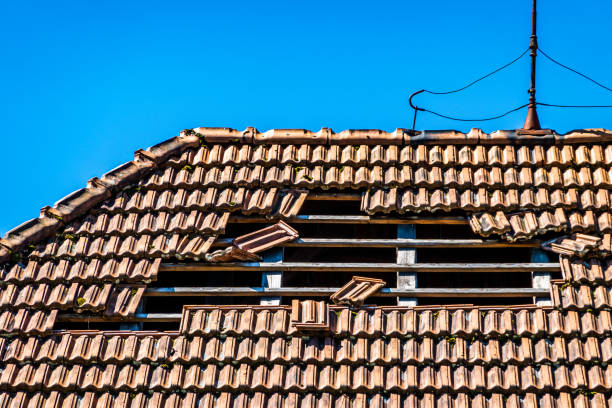
If the fascia becomes damaged, gutters may begin pulling away from the house or sagging after heavy rain.
Because it supports the gutters, it can be under added stress during heavy rain.
What Does the Soffit Do?
The soffit sits underneath the roof overhang. Instead of facing outward, it faces downward.
Many soffits include ventilation openings that allow fresh air to enter the attic.
That airflow helps-
- Reduce excess heat.
- Remove moisture.
- Improve attic ventilation.
- Protect roofing materials.
The soffit isn’t just decorative; it plays an important role in your home’s airflow.
Why Homeowners Mix Them Up
It’s completely understandable.
Both parts-
- Sit next to each other.
- They are often the same color.
- Can be damaged by the same storm.
- Are usually noticed only when something goes wrong.
From the ground, it’s difficult to tell where one ends and the other begins. That’s why homeowners often describe both simply as “the trim near the roof.”
One Problem Can Affect the Other
Although they serve different purposes, soffits and fascia work together.
For example-
Overflowing gutters
Water spilling over clogged gutters can soak the fascia.
Poor ventilation
Blocked soffit vents may trap moisture inside the attic.
Pest entry
Loose soffit panels can become entry points for birds, squirrels or insects.
Knowing the difference also helps explain why contractors inspect both instead of repairing only one component.
Here’s a Quick Way to Tell Which One You’re Looking At
Ask yourself one simple question.
Am I looking straight at it or looking up at it?
If you’re standing in the yard and looking straight toward the roof edge, you’re probably looking at the fascia.
If you’re standing underneath the roof overhang and looking upward, you’re looking at the soffit.
It’s an easy trick that helps many homeowners identify the correct area before scheduling an inspection.
Common Signs Something Isn’t Right
Fascia problems include-
- Gutters pulling away.
- Peeling paint.
- Rotten wood.
- Visible cracks.
- Water stains behind gutters.
Soffit problems include-
- Loose panels
- Animal activity
- Blocked vents
- Moisture stains
- Sagging sections
If you notice any of these signs, it’s a good idea to have both areas evaluated since the damage may extend beyond what’s immediately visible.
Why Correct Terminology Can Save Time
You don’t need to become a roofing expert. But using the correct terms helps contractors understand the issue before arriving.
Instead of saying:
“Something near the roof is broken.”
You can say:
“The fascia behind my gutter looks damaged.”
Or:
“I noticed one of the soffit panels underneath the roof is loose.”
That simple difference makes inspections more efficient and ensures everyone starts the conversation on the same page.
Conclusion
The fascia supports and protects the roof edge, while the soffit protects the underside of the overhang and helps ventilate your attic. Together, they play an important role in protecting your home from moisture, pests, and weather.
At Ceccola Construction, we believe informed homeowners make better decisions. Whether you’re noticing peeling paint, sagging gutters or signs of animal activity, understanding your roofline is the first step toward the right repair.
FAQs
Do all soffits have vents?
No. Some soffits are solid and others are vented, and the type depends on the home’s ventilation design. An inspection can confirm what you have and whether the vents are blocked.
Can the soffit be replaced without replacing the fascia?
Yes. If only the soffit is damaged, it can be repaired or replaced independently. An inspection will determine whether the fascia has also been affected.
Does damaged fascia always mean the gutters need replacing?
Not necessarily. If the gutters are still in good condition, they can be reinstalled after the fascia is repaired or replaced.
Why do soffits have vents?
Vented soffits allow fresh air to enter the attic, helping move air through the attic and manage heat and moisture.
Should I inspect soffit and fascia after a storm?
Yes. High winds, heavy rain and falling branches can damage both components, even if the damage isn’t immediately visible from the ground.